1) What does this mean by the following statements?
Trust is not associative (non-symmetric):
In terms of buyers and sellers, the amount of trust each party has, isn't always the same. The sellers may have a high amount of trust which means the buyer will provide money for the good agreed upon. Even though the buyer may not have the same level of trust, as long as the money is paid, the seller will agree to sell the goods.
Trust is not transitive:
This means that just because the first customer trusts the seller, doesn't mean the second customer will. To a certain extent, this is true. While trust cannot be obtained directly onto the next customer, customers can rely on what other people say to determine whether they will trust the seller. But still, a seller needs to build up that trust. Not only by word of mouth, but have some sort of proof that the customer won't be dissatisfied with the transaction.
Trust is always between exactly 2 parties:
In some cases, this can be true. But it entirely depends on the number of parties involved. When the transaction is between a buyer and seller, this is generally true. But when suppliers, resellers, etc are involved - it can be said that trust can occur between more than two parties.
Trust will involve either direct trust or recommender trust:
Direct trust relates to a consumer basing their judgment of trust on their perspective to the transaction taking place. Recommender trust relates to a consumer basing their judgment on the views of others who have already had experience in the said transaction. With this said, it can be concluded that trust involves either direct or recommended trust.
2a) Have a look at the following websites. What are some of the elements that have been incorporated to increase your trust in the sites? If there are also some aspects which decrease your level of trust describe them as well.
http://www.eBay.com.au
Ebay has a security centre which gives tips on increasing the users' security. Having this feature enables the users to feel confident that everything is secure and enables a good piece of mind. There are constant logos and ebay-related images that solidify a genuine site.
A possible factor going against ebay is the few users who take advantage of other ebay users (Fraud).
http://www.anz.com.au
Without even having to move from the home page, it is obvious that this page is professinal and legitimate to ANZ. This enables users to know they are dealing with an actual bank website, and having certain images that correspond with advertisements they have on tv and in newspapers, allows users to gain a sense of comfort and trust. It has security alerts and proper copyright references.
http://www.thinkgeek.com
One thing that works for this site is that it looks like a lot of effort has gone into creating it which sends a message that if this site weren't trustworthy or legitimate, they wouldn't go to such measures. They had a customer service section which would aid in the confidence this site gives its users and having not been on this site before, if i was interested in the things they were selling, i would choose to use this site.
A possible factor working against this site i probably that it is unknown to many people, and people are always extra cautious when potentially buying off sites like these.
http://www.paypal.com
This site probably offers the most trustworthy features. When i clicked on the home page, it gave me an option to make my account more secure by enabling it to be controlled by mo own security system on my laptop. This straight away ensures security is their main priorety and they don't try to confuse you with over-excessive information.
2b) Find a web site yourself that you think looks untrustworthy.
http://www.ozlove.com.au/
One major untrustworthy segment online, is online dating. How do you know if the picture shown is what the person actually looks like. Worst case scenerio, it can be a place where potential rapists and murderers decide to choose their victims.
Tuesday, 21 May 2013

Saturday, 18 May 2013
TOPIC 9 - CHANNEL CONFLICT
Channel conflict can be defined as ‘any situation where two different marketing or distribution channels are competing for the same sale with the same brand’.

If you purchase something from a retail outlet is it then ok for you to get email promotions or is it SPAM?
Most retail stores now give the option to choose if you want to receive promotions through email or not. I personally will most likely always choose to not receive those promotions because of how regualar they are and the temptation they pose. I just recently paid for a trip to Fiji, and now need to save some spending money, however im seeing discounts and specials sent to me that tempt me to spend more money. As long as there is a choice, i don't think you can label it as spam.
Should you buy key words to protect your brand?
I think to become a massive brand that becomes a household name, you need to have a single word that signifies you and makes you stand out (Nike, Prada). Protecting your brand allows you to become unique and further promotes your image as a market leader rather than a market follower. McDonalds has been in regular legal dispute over other businesses who use any names under the McDonalds trademark, because they secured the name for their brand. In order to be fully in control of a word, it needs to be bought and therefore to protect your brand, you need to have paid your dues.
12 months on after the release of Windows 8, is it still an issue?
I think the primary reason Acer has lashed out at Microsoft is because they are threatened. Microsoft is a massive business with a huge customer-buying influence, and to bring out a platform that is essentially compatible with Microsoft's new software, is a competitor's worst nightmare. I can't speak for the rest of the population but a company who are leaders in software decide to bring out a platform to coincide with that release, i would be more inclined to buy that new product because of the company's knowledge and power of that market. To criticise Microsoft and say that 'It is not something you are good at' (ChinaTimes), is like telling an artist they are not creative. It doesn't make sense.
REFERENCES
ChinaTimes. (August 9, 2012). Acer CEO slams Microsoft's surface tablet. Retrieved May 18, 2013, from http://www.wantchinatimes.com/news-subclass-cnt.aspx?id=20120809000060&cid=1102
If you purchase something from a retail outlet is it then ok for you to get email promotions or is it SPAM?
Most retail stores now give the option to choose if you want to receive promotions through email or not. I personally will most likely always choose to not receive those promotions because of how regualar they are and the temptation they pose. I just recently paid for a trip to Fiji, and now need to save some spending money, however im seeing discounts and specials sent to me that tempt me to spend more money. As long as there is a choice, i don't think you can label it as spam.
Should you buy key words to protect your brand?
I think to become a massive brand that becomes a household name, you need to have a single word that signifies you and makes you stand out (Nike, Prada). Protecting your brand allows you to become unique and further promotes your image as a market leader rather than a market follower. McDonalds has been in regular legal dispute over other businesses who use any names under the McDonalds trademark, because they secured the name for their brand. In order to be fully in control of a word, it needs to be bought and therefore to protect your brand, you need to have paid your dues.
12 months on after the release of Windows 8, is it still an issue?
I think the primary reason Acer has lashed out at Microsoft is because they are threatened. Microsoft is a massive business with a huge customer-buying influence, and to bring out a platform that is essentially compatible with Microsoft's new software, is a competitor's worst nightmare. I can't speak for the rest of the population but a company who are leaders in software decide to bring out a platform to coincide with that release, i would be more inclined to buy that new product because of the company's knowledge and power of that market. To criticise Microsoft and say that 'It is not something you are good at' (ChinaTimes), is like telling an artist they are not creative. It doesn't make sense.
REFERENCES
ChinaTimes. (August 9, 2012). Acer CEO slams Microsoft's surface tablet. Retrieved May 18, 2013, from http://www.wantchinatimes.com/news-subclass-cnt.aspx?id=20120809000060&cid=1102
TOPIC 8 - ONLINE AUCTIONS
1) eBay is one of the only major Internet "pure plays" to consistently make a profit from its inception. What is eBay's business model? Why has it been so successful?
eBay's business model is primarily formed around being an auction broker. This means that auctions are conducted for the seller, given that they prescribe a fee. Buyers can then make offers on the seller's products until the time lapse comes to a close. The buyer with the highest bid is then able to purchase that product, just like at a physical auction.

The reason ebay has been so successful, is beacuse it allows an endless range of goods to be sold and bought, that differ in terms of condition, location and price. There is also the theory that many of the specialty items can't be found anywhere else beacuse they are not excessively in demand. It has strong productive features like easy navigation, clear layout and a secure payment method (paypal).
2) Other major web sites, like Amazon.com and Yahoo!, have entered the auction marketplace with far less success than eBay. How has eBay been able to maintain its dominant position?
In relation to Amazon, ebay is able to maintain its dominant position by bringing buyers and sellers together. Amazon holds the items being sold on its site which enables the transaction to be completely processed by the buyer and seller, meaning it doesn't have to worry about possilbe holding fees and shipment/delivery costs. Another thing that ebay has working for them is their use and promotion of paypal. Ebay has seen paypal become a massive money making machine, $US1.4 billion last quarter, a 26 per cent jump from the same quarter a year ago (Perlroth).
3) What method does eBay use to reduce the potential for fraud among traders on its site? What kinds of fraud, if any, are eBay users most susceptible?
The only way ebay is able to monitor and act upon fraud is by conducting feedback surveys for its customers that allows ebay to be aware of users that are conducting fake acts and sales. They also employ people specifically to deal with fraud and who are paid to seek out people who are selling false items or who are misleading.
Types of fraud that can occur on ebay include:
- paying for an item, and not receiving the item.
- sending your item away and not receiving payment. People from third world countries often try to buy items on ebay by telling the seller that they have already payed for the item, that it will just take a few days to come through, the seller believes them and sends the item away, and the buyer receives the item for free.
- paying for an item, and not receiving what you were promised.
4) eBay makes every effort to conceptualize its users as a community (as opposed to, say "customers" or "clients"). What is the purpose of this conceptual twist and does eBay gain something by doing it?
The purpose of labellising their customers and clients as a community, is because it gives them the idea that they are apart of the company and that they are a part of ebay's success. The biggest gain ebay can make by this formation, is becoming a reputable brand name that envisages its clients and customers needs and wants as their main priorety. Trust can be a big issue with online auctions so having clients and customers that value the company's input and process, allows ebay to be seen as a sort of town mayor.
5) eBay has long been a marketplace for used goods and collectibles. Today, it is increasingly a place where major businesses come to auction their wares. Why would a brand name vendor set-up shop on eBay?
The price of setting up your own website can be very costly which is why more and more businesses are using ebay as a source to sell their products. Ebay already has millions of customers, which gives businesses maximum opportunity for potential customers to purchase their products. You are able to access a wider target market; not just the business' primary target market. Ebay enables other businesses to use its resources without having to pay out of the bucket for them. It also allows the business to communicate directly to the consumer, whereas with their own site, there would be a barrier due to not having an intermediary such as ebay.
REFERENCES
Perlroth, N. (July 20, 2012). ebay powers on to make itself a dominant force. Retrieved May 18, 2013, from http://www.smh.com.au/business/ebay-powers-on-to-make-itself-a-dominant-force-20120719-22d12.html
eBay's business model is primarily formed around being an auction broker. This means that auctions are conducted for the seller, given that they prescribe a fee. Buyers can then make offers on the seller's products until the time lapse comes to a close. The buyer with the highest bid is then able to purchase that product, just like at a physical auction.
The reason ebay has been so successful, is beacuse it allows an endless range of goods to be sold and bought, that differ in terms of condition, location and price. There is also the theory that many of the specialty items can't be found anywhere else beacuse they are not excessively in demand. It has strong productive features like easy navigation, clear layout and a secure payment method (paypal).
2) Other major web sites, like Amazon.com and Yahoo!, have entered the auction marketplace with far less success than eBay. How has eBay been able to maintain its dominant position?
In relation to Amazon, ebay is able to maintain its dominant position by bringing buyers and sellers together. Amazon holds the items being sold on its site which enables the transaction to be completely processed by the buyer and seller, meaning it doesn't have to worry about possilbe holding fees and shipment/delivery costs. Another thing that ebay has working for them is their use and promotion of paypal. Ebay has seen paypal become a massive money making machine, $US1.4 billion last quarter, a 26 per cent jump from the same quarter a year ago (Perlroth).
3) What method does eBay use to reduce the potential for fraud among traders on its site? What kinds of fraud, if any, are eBay users most susceptible?
The only way ebay is able to monitor and act upon fraud is by conducting feedback surveys for its customers that allows ebay to be aware of users that are conducting fake acts and sales. They also employ people specifically to deal with fraud and who are paid to seek out people who are selling false items or who are misleading.
Types of fraud that can occur on ebay include:
- paying for an item, and not receiving the item.
- sending your item away and not receiving payment. People from third world countries often try to buy items on ebay by telling the seller that they have already payed for the item, that it will just take a few days to come through, the seller believes them and sends the item away, and the buyer receives the item for free.
- paying for an item, and not receiving what you were promised.
4) eBay makes every effort to conceptualize its users as a community (as opposed to, say "customers" or "clients"). What is the purpose of this conceptual twist and does eBay gain something by doing it?
The purpose of labellising their customers and clients as a community, is because it gives them the idea that they are apart of the company and that they are a part of ebay's success. The biggest gain ebay can make by this formation, is becoming a reputable brand name that envisages its clients and customers needs and wants as their main priorety. Trust can be a big issue with online auctions so having clients and customers that value the company's input and process, allows ebay to be seen as a sort of town mayor.
5) eBay has long been a marketplace for used goods and collectibles. Today, it is increasingly a place where major businesses come to auction their wares. Why would a brand name vendor set-up shop on eBay?
The price of setting up your own website can be very costly which is why more and more businesses are using ebay as a source to sell their products. Ebay already has millions of customers, which gives businesses maximum opportunity for potential customers to purchase their products. You are able to access a wider target market; not just the business' primary target market. Ebay enables other businesses to use its resources without having to pay out of the bucket for them. It also allows the business to communicate directly to the consumer, whereas with their own site, there would be a barrier due to not having an intermediary such as ebay.
REFERENCES
Perlroth, N. (July 20, 2012). ebay powers on to make itself a dominant force. Retrieved May 18, 2013, from http://www.smh.com.au/business/ebay-powers-on-to-make-itself-a-dominant-force-20120719-22d12.html
Friday, 17 May 2013
TOPIC 7 - AUTOMATA
1) Check this link to my ‘intelligent’ cybertwin which I also mentioned in the Powerpoint. You may like to create your own cybertwin as well. The more you 'train' your twin, the better the responses will be. While it is just a fun exercise, Think of the opportunities. Imagine if we had a cybertwin that could answer your questions about the course. Or perhaps a shopping assistant?
The idea of a robotic reactor being able to answer your questions, especially as a source of knowledege for a course, is a productive way of enabling students to have 24 hour access to guidance. Some problems however with something as sophistocated with this innovation is the ability to get detailed responses to questions, where with human interaction, you could. I think as assistance factor it could be used with success, however to use it as a major teaching source isn't appropriate.
2) Write one paragraph describing the Turing test and another paragraph describing an argument against the Turing Test, known as the about the Chinese room.
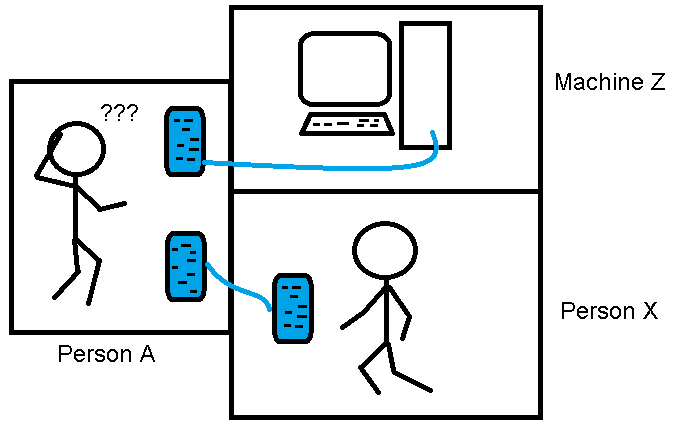
The Turing Test is a theoretical test for determining whether or not a machine intelligence can converse like a human. The test is named after WWII-era computer genius Alan Turing, who made it up. The Turing Test is an anthropocentric test, which means that it doesn't test for intelligence in general, but merely the ability to converse like a human being. The early implication was that the test measured objective intelligence. However, there could potentially be an Artificial Intelligence that merely doesn't speak human languages or understand human conversation (wiseGEEK).
The Chinese Room argument was devised by John Searle, and is an argument against the possibility of true artificial intelligence. The argument centers on a thought experiment in which someone who knows only English sits alone in a room following English instructions to construct strings of Chinese characters; to the point that people outside the room believe the person inside can speak Chinese. The argument is intended to show that while suitably programmed computers may appear to converse in natural language, they are not capable of understanding language, even in principle (Standford encyclopedia of philosophy).
3) Can virtual agents succeed in delivering high-quality customer service over the Web? Think of examples which support or disprove the question or just offer an opinion based on your personal experience.
I think it depends on what knowledge the virtual agent contains and what the nature of the question involves. For example if these virtual agents were to be introduced to give medical advice as a 24/7 medical assistance program, the quality of the responses couldn't be trusted upon enough; this is beacuse it deals with the properties of ones life. However if you look at introducing it into an organisation like Telstra, it would save customers waiting on hold for hours and could boost Telstra's overall reputation. The knowlege needed wouldn't be as thorough as with the medical outlook, and it would make sense that a computerised robot would be answering questions about technological problems; mainly because it uses similar systems.
REFERENCES
Standford Encyclopedia of Philosophy. (September 22, 2009). The Chinese room argument. Retrieved May 18, 2013, from http://plato.stanford.edu/entries/chinese-room/
wiseGEEK. (2013). What is the turning test?. Retrieved May 18, 2013, from http://www.wisegeek.com/what-is-the-turing-test.htm
The idea of a robotic reactor being able to answer your questions, especially as a source of knowledege for a course, is a productive way of enabling students to have 24 hour access to guidance. Some problems however with something as sophistocated with this innovation is the ability to get detailed responses to questions, where with human interaction, you could. I think as assistance factor it could be used with success, however to use it as a major teaching source isn't appropriate.
2) Write one paragraph describing the Turing test and another paragraph describing an argument against the Turing Test, known as the about the Chinese room.
The Turing Test is a theoretical test for determining whether or not a machine intelligence can converse like a human. The test is named after WWII-era computer genius Alan Turing, who made it up. The Turing Test is an anthropocentric test, which means that it doesn't test for intelligence in general, but merely the ability to converse like a human being. The early implication was that the test measured objective intelligence. However, there could potentially be an Artificial Intelligence that merely doesn't speak human languages or understand human conversation (wiseGEEK).
The Chinese Room argument was devised by John Searle, and is an argument against the possibility of true artificial intelligence. The argument centers on a thought experiment in which someone who knows only English sits alone in a room following English instructions to construct strings of Chinese characters; to the point that people outside the room believe the person inside can speak Chinese. The argument is intended to show that while suitably programmed computers may appear to converse in natural language, they are not capable of understanding language, even in principle (Standford encyclopedia of philosophy).
3) Can virtual agents succeed in delivering high-quality customer service over the Web? Think of examples which support or disprove the question or just offer an opinion based on your personal experience.
I think it depends on what knowledge the virtual agent contains and what the nature of the question involves. For example if these virtual agents were to be introduced to give medical advice as a 24/7 medical assistance program, the quality of the responses couldn't be trusted upon enough; this is beacuse it deals with the properties of ones life. However if you look at introducing it into an organisation like Telstra, it would save customers waiting on hold for hours and could boost Telstra's overall reputation. The knowlege needed wouldn't be as thorough as with the medical outlook, and it would make sense that a computerised robot would be answering questions about technological problems; mainly because it uses similar systems.
REFERENCES
Standford Encyclopedia of Philosophy. (September 22, 2009). The Chinese room argument. Retrieved May 18, 2013, from http://plato.stanford.edu/entries/chinese-room/
wiseGEEK. (2013). What is the turning test?. Retrieved May 18, 2013, from http://www.wisegeek.com/what-is-the-turing-test.htm
Sunday, 21 April 2013
TOPIC 6 - DIGITAL MARKETS
Question 1
a) what experiences have you had with online shopping?
I have probably only started venturing through online shopping about a year ago, but since then i have become a persistant online shopper. It mostly consists of browsing, comparing prices, checking prices online before i go into the phyiscal store or even purchasing content online instead of buying it throught the physical store. I am yet to have a bad experience with online shopping which solidifies that the sites i visit and trustworthy and creditable.
b) describe a good experience.
I have consistenly had good experiences with jb-hi-fi's online store. If ballarat doesnt have the product i want in stock, which can more than sometimes be the case, i just go on to their online store and it is at my door within a couple of days. If the product isnt in stock online either, it explains that the order may take a little longer due to having no stock which is the better way to do it rather than expect it to come when it won't.
c) what did you like about the online store that you used?
It is really easy to navigate and find exactly what you are looking for. Paying for the items is just as easy as it has step by step instructions and a thing i really liked was that you can picl up your ordered items in your local store or have them delivered to your door.
d) describe a bad experience.
As i mentioned before i am yet to have a bad online experience, touch wood, however i have heard of my friends having bad experiences. One tried selling a brand new phone on ebay and found a buyer that agreed to the price offered, and stated that they had sent the money to them. However it was a hoax, and the money hadn't been sent through, they clearly tried to trick them into giving them the phone for free. My friend fortunately didnt fall for it, but not everyone is like that and i'm sure they have conned many before and many after.
f) what problems did you have with the online store?
I have never bought something off of ebay, however the friend i mentioned before said because the company isn't selling the products, its between the individual seller and buyer, the best thing they could do is ban the user. I am sure ebay have a process of identifying these con-artists but it is still so easy to be tricked on this site.
g) what features make an online store less appealing?
For me, layout of a site either indicates whether i am going to use it or not. It also needs to be in relation to the products they are selling, for example if it were a vintage store, having bright colours with modernised features contradicts the purpose of buying vintage. One of the most important features is the method of payment. I you get that wrong and make it difficult or not straight forward, you are already losing out.
h) should we expect the prices of goods and services to rise and fall due to the migration of consumers online?
I think online stores have more freedom or advantage in rising their prices now because of the influx of online shoppers v physical shoppers. With that said they need to be sure they are offering discounts, specials and fair pricing to compete with the physical stores. The way things are going in our current society online stores would be inclined to rise prices due to more traffic whereas physical stores with no online stores would be more inclined to lower prices to attract more customers. It also comes down to whether the goods and normal or inferior.
Question 2
a) The dispersion of prices (the spread between lowest and highest price of a product) will narrow.
I believe this statement to be true because of the competitveness and sustainability of rival companies. We have already seen the dispersion of prices of confectionary narrow between home brand and family brands such as starburst or cadbury, due to having to become sustainable for the future. Products that are home brand have seen prices increases due to the instability of the market and the strength of the Australian dollar.
b) the importance of brand names will decrease.
Brand names such as Prada or Louis Vuitton will not decrease because of their impact and specialty in luxury goods. I think brands that sell luxury goods with high prices will continue to be strong because its what a customer desires to purchase. I think brands that sell normal goods or things that are essential like groceries will gradually decrease because of the consumer trying to save as much money as possible with necessity items such as food and drink so that they can still desire luxury goods of brand names.
c) price competiton will make all products cheaper.
I agree that most products with competiton will become cheaper but not all. Today consumers have so many choices for a single product that they are most likely to seek out the cheapest and most beneficial item to buy. There are alternatives to this such as purchasing land or buying a home. More competition means that consumers are willing to pay more for a standard of living than they are for a new car.
d) Digital Markets will become dominated by a handful of mega-sites, like Amazon.
I agree with this statement with the exception of unique or specialty stores. There are mega-sites such as Asos that has no close competion in offering both an extensive and collected range of both male and female wears. You do have stores such as general pants that offer that as well, but not at the same level or extent as Asos. There will always be independent stores that have success due to the subject of their items. Consumers are willing to pay the bucks for specialty and unique goods which can keep independant online business afloat.
e) How do you think the balance of power between buyers and sellers will change?
Buyers already have an extensive amount of power when it comes to business with sellers. They have the power to send an item back and get their payment for it, in supermarkets there is a 200% guarantee on fresh produce. I also think that the power buyers have is dangerous. Sellers can be taken advantage for and can really miss the benefit of providing goods to customers.
f) prices are clustered online.
I think prices online are very similar when comparing products. The things when it comes to pricing consumers have to look for, is when stores are offering discounts, or when their specials or stocktake is beginning. When a new item comes out, prices can be almost exactly the same no matter where you go, so consumers need to look at things that will alter the competitve price in the future.
g) Online prices are elastic.
Online prices are very much elastic as product price is an amount that is affected by both interal and external factors. Demand and supply are the key factors when it comes to elasticity of a product. Some examples that can change supply and demand are technicological changes, shortages of materials, tastes, competitor prices, price of manufacturing the product.
Question 3
a) What types of m-commerce services does your cell phone provider offer?
Like most people today i have a smartphone, an iphone on a monthly plan that allows me 2gb of mobile data and hundreds of dollars worth of phone calls and texts. There are plenty of hidden costs that come with phone plans such as things that arent covered in your data such as international texts/phone calls and data usage above the given 2gb.
b) Which of these services do you use?
I constantly use online banking to transfer funds from one account to another. I surf the web using my data allowance of 2gb but if connected can use wireless. I download music, watch youtube videos and download apps to play and utulise with my every day life.
c) What types of transactions do you make through your cell phone or wireless device?
The only transaction i make using a wireless device is to check my bank account or to buy music or apps. I do not buy online from a wireless device, i do browse, but i have a thing about only using a computer to purchase goods online, i feel safer doing so.
d) What types of transactions would you like to be able to perform, but are unable to do?
I am sure if there were any i wanted to do, someone would have invented it already. That is one of the benefits of growing up in a technological aware generation. People can find solutuions, and give you resources to find them yourself.
e) What is your opinion of wireless advertising/mobile marketing?
Mobile marketing is so annoying. Things like company messages advising you of specials and discounts are very quickly deleted out of inbox, most of the time without reading them. We want texts from people not companies. I think that is why we have emails. Mobile marketing for me is not worth it, when an email is more likely to be read and acted upon.
a) what experiences have you had with online shopping?
I have probably only started venturing through online shopping about a year ago, but since then i have become a persistant online shopper. It mostly consists of browsing, comparing prices, checking prices online before i go into the phyiscal store or even purchasing content online instead of buying it throught the physical store. I am yet to have a bad experience with online shopping which solidifies that the sites i visit and trustworthy and creditable.
b) describe a good experience.
I have consistenly had good experiences with jb-hi-fi's online store. If ballarat doesnt have the product i want in stock, which can more than sometimes be the case, i just go on to their online store and it is at my door within a couple of days. If the product isnt in stock online either, it explains that the order may take a little longer due to having no stock which is the better way to do it rather than expect it to come when it won't.
c) what did you like about the online store that you used?
It is really easy to navigate and find exactly what you are looking for. Paying for the items is just as easy as it has step by step instructions and a thing i really liked was that you can picl up your ordered items in your local store or have them delivered to your door.
d) describe a bad experience.
As i mentioned before i am yet to have a bad online experience, touch wood, however i have heard of my friends having bad experiences. One tried selling a brand new phone on ebay and found a buyer that agreed to the price offered, and stated that they had sent the money to them. However it was a hoax, and the money hadn't been sent through, they clearly tried to trick them into giving them the phone for free. My friend fortunately didnt fall for it, but not everyone is like that and i'm sure they have conned many before and many after.
f) what problems did you have with the online store?
I have never bought something off of ebay, however the friend i mentioned before said because the company isn't selling the products, its between the individual seller and buyer, the best thing they could do is ban the user. I am sure ebay have a process of identifying these con-artists but it is still so easy to be tricked on this site.
g) what features make an online store less appealing?
For me, layout of a site either indicates whether i am going to use it or not. It also needs to be in relation to the products they are selling, for example if it were a vintage store, having bright colours with modernised features contradicts the purpose of buying vintage. One of the most important features is the method of payment. I you get that wrong and make it difficult or not straight forward, you are already losing out.
h) should we expect the prices of goods and services to rise and fall due to the migration of consumers online?
I think online stores have more freedom or advantage in rising their prices now because of the influx of online shoppers v physical shoppers. With that said they need to be sure they are offering discounts, specials and fair pricing to compete with the physical stores. The way things are going in our current society online stores would be inclined to rise prices due to more traffic whereas physical stores with no online stores would be more inclined to lower prices to attract more customers. It also comes down to whether the goods and normal or inferior.
Question 2
a) The dispersion of prices (the spread between lowest and highest price of a product) will narrow.
I believe this statement to be true because of the competitveness and sustainability of rival companies. We have already seen the dispersion of prices of confectionary narrow between home brand and family brands such as starburst or cadbury, due to having to become sustainable for the future. Products that are home brand have seen prices increases due to the instability of the market and the strength of the Australian dollar.
b) the importance of brand names will decrease.
Brand names such as Prada or Louis Vuitton will not decrease because of their impact and specialty in luxury goods. I think brands that sell luxury goods with high prices will continue to be strong because its what a customer desires to purchase. I think brands that sell normal goods or things that are essential like groceries will gradually decrease because of the consumer trying to save as much money as possible with necessity items such as food and drink so that they can still desire luxury goods of brand names.
c) price competiton will make all products cheaper.
I agree that most products with competiton will become cheaper but not all. Today consumers have so many choices for a single product that they are most likely to seek out the cheapest and most beneficial item to buy. There are alternatives to this such as purchasing land or buying a home. More competition means that consumers are willing to pay more for a standard of living than they are for a new car.
d) Digital Markets will become dominated by a handful of mega-sites, like Amazon.
I agree with this statement with the exception of unique or specialty stores. There are mega-sites such as Asos that has no close competion in offering both an extensive and collected range of both male and female wears. You do have stores such as general pants that offer that as well, but not at the same level or extent as Asos. There will always be independent stores that have success due to the subject of their items. Consumers are willing to pay the bucks for specialty and unique goods which can keep independant online business afloat.
e) How do you think the balance of power between buyers and sellers will change?
Buyers already have an extensive amount of power when it comes to business with sellers. They have the power to send an item back and get their payment for it, in supermarkets there is a 200% guarantee on fresh produce. I also think that the power buyers have is dangerous. Sellers can be taken advantage for and can really miss the benefit of providing goods to customers.
f) prices are clustered online.
I think prices online are very similar when comparing products. The things when it comes to pricing consumers have to look for, is when stores are offering discounts, or when their specials or stocktake is beginning. When a new item comes out, prices can be almost exactly the same no matter where you go, so consumers need to look at things that will alter the competitve price in the future.
g) Online prices are elastic.
Online prices are very much elastic as product price is an amount that is affected by both interal and external factors. Demand and supply are the key factors when it comes to elasticity of a product. Some examples that can change supply and demand are technicological changes, shortages of materials, tastes, competitor prices, price of manufacturing the product.
Question 3
a) What types of m-commerce services does your cell phone provider offer?
Like most people today i have a smartphone, an iphone on a monthly plan that allows me 2gb of mobile data and hundreds of dollars worth of phone calls and texts. There are plenty of hidden costs that come with phone plans such as things that arent covered in your data such as international texts/phone calls and data usage above the given 2gb.
b) Which of these services do you use?
I constantly use online banking to transfer funds from one account to another. I surf the web using my data allowance of 2gb but if connected can use wireless. I download music, watch youtube videos and download apps to play and utulise with my every day life.
c) What types of transactions do you make through your cell phone or wireless device?
The only transaction i make using a wireless device is to check my bank account or to buy music or apps. I do not buy online from a wireless device, i do browse, but i have a thing about only using a computer to purchase goods online, i feel safer doing so.
d) What types of transactions would you like to be able to perform, but are unable to do?
I am sure if there were any i wanted to do, someone would have invented it already. That is one of the benefits of growing up in a technological aware generation. People can find solutuions, and give you resources to find them yourself.
e) What is your opinion of wireless advertising/mobile marketing?
Mobile marketing is so annoying. Things like company messages advising you of specials and discounts are very quickly deleted out of inbox, most of the time without reading them. We want texts from people not companies. I think that is why we have emails. Mobile marketing for me is not worth it, when an email is more likely to be read and acted upon.
Sunday, 7 April 2013
TOPIC 5 - BUSINESS MODELS
There are nine types of business models and below are features and examples of each.

Brokerage:
- bring buyers and sellers together
- facilitate transactions
- charges a fee for each transaction
A good examples is a transactional broker which provides a third-party payment mechanism for buyers and sellers to settle a transaction. (PayPal)
Advertising:
- provides visual content in the form of banner ads
- banner ads are a major source of revenue
- works better with larger volumes of traffic
A good example is the classified section you will find in a newspaper that lists items for sale or that are wanted to purchase. There are listing fees and possible membership fees. (Craigslist)
Infomediary:
- collects data on consumers and their habits and trends
- assist buyers and sellers to understand the market
- allows an advantage to buyers and sellers
A good example is metamediary which facilitates a transaction between buyer and seller without being involved in the actual exchange of goods or services. (Edmunds)
Merchant:
- concerns wholesalers and retailers of their goods and services
- Sales are based on price lists or through auctions.
An example of a merchant is the click-and-mortar method which is made up of traditional brick-and-mortar retail establishment with web storefront. (Barnes and Noble)
Manufacturer:
- allows manufacturer to reach buyers directly
- compresses the distribution channel
- more efficient, better customer service and a better understanding of customer preference.
An example of this is the license factor which involves only the transfer of usage rights to the buyer, in accordance with a "terms of use" agreement. Ownership rights remain with the manufacturer.
(Dell Computers)
Afflitate:
- provides purchase opportunites to when ever a potential buyer is on the web
- offers financial incentives to partner sites
- It is a pay-for-performance model
Amazon is a good example which uses banner exchange, pay-per-click and revenue sharing.
Community:
- based on user loyalty and the time they spend
- revenue can be based on voluntary contribution or based on the sales of ancillary products and servces.
- more fertile area of development
An good example of this is open content which consists of openly accessible content developed collaboratively by a global community of contributors who work voluntarily. (Wikipedia)
Subscription:
- users are charged a periodic fee to sunscribe to the service
- combining free content with premium membership
- costs are irrespective of actual usage rates
An example of this are internet service providers which offer network connectivety and related services on a monthly basis. (America Online)
Utility:
- 'pay as you go' approach
- charges customers for active connection minutes
- based on actual usage rates
Examples are your everyday services like electricity or gas which combines metered usage and metered subscriptions to present to the consumers.
The above content can be quoted, annotated and referenced as information by Michael Rappa.
Which business model does Twitter utilise?
Businesses are using Twitter in several ways. Content and Media companies are using Twitter to drive traffic to their websites. It is being used by e-commerce and local businesses for deal promotions. Some businesses are using it as a customer service channel; while some are using it to increase their brand awareness and monitor their brand perception. Some non-profits are using Twitter as a fund-raising channel as well. So it can be said that is utilises the advertising model.
How Australia rates in being technologically ready...
What is the Mobile phone use /100 population - compare Australia, USA, China, India, Your Country?
China is ranked number one with 81.2% of their population using mobile phones. (1.09 billion)
India is second with 71.3% using mobile phones. (906.6 million)
USA is third with 103.3% using/having mobile phones. (321.7 million)
Australia is ranked 38th with 100.4% using/having mobile phones. (21.26 million)
(mobiThinking, 2013)
What is the internet use /100 population - compare Australia, USA, China, India, Your Country?
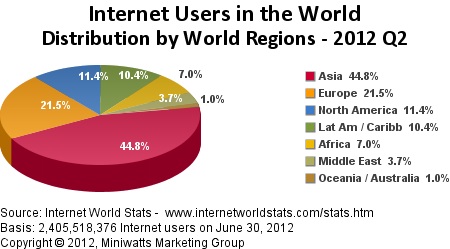

Compare main strengths and weaknesses of Australia or your home country in the survey.
The main disadvantage concerning Australia is its total population in comparison to other countries, for example China and the US. In spite of that, the survey did show that Australia has more mobile phones than its population so for every one citizen there is more than one phone. Whereas other countries like China don't due to their large population.
Comparing regions is also a disadvantage due to certain regions like Asia and Europe being much larger than Oceania and the Middle East.
REFERENCES
mobiThinking. (2013). Top mobile markets: The 10 million club. Retrieved April 7, 2013, from
http://mobithinking.com/mobile-marketing-tools/latest-mobile-stats/a#topmobilemarkets
Rappa, M. (2009). Business models on the web. Retrieved April 7, 2013, from http://digitalenterprise.org/models/models.html#Advertising
Brokerage:
- bring buyers and sellers together
- facilitate transactions
- charges a fee for each transaction
A good examples is a transactional broker which provides a third-party payment mechanism for buyers and sellers to settle a transaction. (PayPal)
Advertising:
- provides visual content in the form of banner ads
- banner ads are a major source of revenue
- works better with larger volumes of traffic
A good example is the classified section you will find in a newspaper that lists items for sale or that are wanted to purchase. There are listing fees and possible membership fees. (Craigslist)
Infomediary:
- collects data on consumers and their habits and trends
- assist buyers and sellers to understand the market
- allows an advantage to buyers and sellers
A good example is metamediary which facilitates a transaction between buyer and seller without being involved in the actual exchange of goods or services. (Edmunds)
Merchant:
- concerns wholesalers and retailers of their goods and services
- Sales are based on price lists or through auctions.
An example of a merchant is the click-and-mortar method which is made up of traditional brick-and-mortar retail establishment with web storefront. (Barnes and Noble)
Manufacturer:
- allows manufacturer to reach buyers directly
- compresses the distribution channel
- more efficient, better customer service and a better understanding of customer preference.
An example of this is the license factor which involves only the transfer of usage rights to the buyer, in accordance with a "terms of use" agreement. Ownership rights remain with the manufacturer.
(Dell Computers)
Afflitate:
- provides purchase opportunites to when ever a potential buyer is on the web
- offers financial incentives to partner sites
- It is a pay-for-performance model
Amazon is a good example which uses banner exchange, pay-per-click and revenue sharing.
Community:
- based on user loyalty and the time they spend
- revenue can be based on voluntary contribution or based on the sales of ancillary products and servces.
- more fertile area of development
An good example of this is open content which consists of openly accessible content developed collaboratively by a global community of contributors who work voluntarily. (Wikipedia)
Subscription:
- users are charged a periodic fee to sunscribe to the service
- combining free content with premium membership
- costs are irrespective of actual usage rates
An example of this are internet service providers which offer network connectivety and related services on a monthly basis. (America Online)
Utility:
- 'pay as you go' approach
- charges customers for active connection minutes
- based on actual usage rates
Examples are your everyday services like electricity or gas which combines metered usage and metered subscriptions to present to the consumers.
The above content can be quoted, annotated and referenced as information by Michael Rappa.
Which business model does Twitter utilise?
Businesses are using Twitter in several ways. Content and Media companies are using Twitter to drive traffic to their websites. It is being used by e-commerce and local businesses for deal promotions. Some businesses are using it as a customer service channel; while some are using it to increase their brand awareness and monitor their brand perception. Some non-profits are using Twitter as a fund-raising channel as well. So it can be said that is utilises the advertising model.
How Australia rates in being technologically ready...
What is the Mobile phone use /100 population - compare Australia, USA, China, India, Your Country?
China is ranked number one with 81.2% of their population using mobile phones. (1.09 billion)
India is second with 71.3% using mobile phones. (906.6 million)
USA is third with 103.3% using/having mobile phones. (321.7 million)
Australia is ranked 38th with 100.4% using/having mobile phones. (21.26 million)
(mobiThinking, 2013)
What is the internet use /100 population - compare Australia, USA, China, India, Your Country?
Compare main strengths and weaknesses of Australia or your home country in the survey.
The main disadvantage concerning Australia is its total population in comparison to other countries, for example China and the US. In spite of that, the survey did show that Australia has more mobile phones than its population so for every one citizen there is more than one phone. Whereas other countries like China don't due to their large population.
Comparing regions is also a disadvantage due to certain regions like Asia and Europe being much larger than Oceania and the Middle East.
REFERENCES
mobiThinking. (2013). Top mobile markets: The 10 million club. Retrieved April 7, 2013, from
http://mobithinking.com/mobile-marketing-tools/latest-mobile-stats/a#topmobilemarkets
Rappa, M. (2009). Business models on the web. Retrieved April 7, 2013, from http://digitalenterprise.org/models/models.html#Advertising
Wednesday, 27 March 2013
TOPIC 4 - DIGITAL DESIGN
1. In two
paragraphs explain why a customer centric web site design is so important, yet
so difficult to accomplish?
Designing a website that is customer friendly can be one of the hardest but most essential things to do if a business is to have success online. There are a few important factors that are needed if a website is to be functionally accessed and used by its consumers, which include:
- It should be clealry organised
- easy to navigate
- not have needless information that could distract consumers
- clearly labelled categories with easy-to-find links
The consumer, after all, is the most important link to creating a customer centric web site. You want to be able to sell your website as something worth looking at as soon as the consumer clicks on your page. The consumer won't go looking for something to keep them on the site, it needs to be presented to them on first approach so as to entice them to more time spent on your site.
The reason it is so difficult to get it right, is not only because of the many different user types and individuals, but because of the constant competition in every market. Consumers are in high demand of sites that are better than its competitors, which may be offering discounts or other promotional benefits. It is essential to be aware of the current online market and at a minimum match what the best performing sites are doing. A website will not please everyone but it should make the effort to conforming to as many consumers they can for optimal succession.
2. Define the term ‘presence’. Write an additional paragraph that describes why firms that do business on the Web should be more concerned about presence than firms that operate in the physical world.
Presence can be defined as;
"The state or fact of being present; current existence or occurrence."
"Immediate proximity in time or space."
(The Free Dictionary, 2009)
Being present online takes a greater depth into the definition of 'presence'. Online presence is i suppose being accessed by consumers and generating an inclining number of visitors to the site. Businesses who do business only on the web should be more concerned because they have nothing to fall back on if their website doesn't take off. Businesses like General Pants Co. and Jb-hi-fi have presence both in the physical world and online which solidifies an advantage over online business. You will often see online businesses like Asos having to continually offer discounts and promotions like free-shipping to stay ahead of the competition and to stay ahead of businesses who are present in the physical world as well. Customers in the physical world can always just walk into a shop and browse, try things on but when it comes to online, a large part of what sells a website is the amount of trust a consumer has for the business. One bad review of service from the online process can change a potential customer's mind about purchasing items from your business.
3. *Usable Doesn’t Have To Mean Ugly ‘for a web design to be truly beautiful, it has to be functional, have purpose and contribute in some way to the website’s intuitiveness, usefulness and branding. All of these things contribute to the overall effect of a design’. This is a quote from one of the articles on web design linked on Web pages that suck. Find a web page that ‘does not suck’ and discuss the features that make it work.
 The website that in my opinion 'does not suck' is the General Pants Co. website because it covers the key criteria i mentioned above. As well as being a site that i visit regualarily and purchase from, it exists in the physical world also. This is a credit to itself as it has achieved a positive basis and output for consumers in both its online website and physical store.
Here are some reasons why it works:
- It is visually appealing on first look
- has clear and easy to find links
- uses an appropriate amount of visual image to counter words.
- specifies on privacy importance
- Advertises discounts where other competitors don't want you knowing about.
REFERENCES
TheFreeDictionary. (2009). Presence. Retreived March 26, 2013, from http://www.thefreedictionary.com/presence
Designing a website that is customer friendly can be one of the hardest but most essential things to do if a business is to have success online. There are a few important factors that are needed if a website is to be functionally accessed and used by its consumers, which include:
- It should be clealry organised
- easy to navigate
- not have needless information that could distract consumers
- clearly labelled categories with easy-to-find links
The consumer, after all, is the most important link to creating a customer centric web site. You want to be able to sell your website as something worth looking at as soon as the consumer clicks on your page. The consumer won't go looking for something to keep them on the site, it needs to be presented to them on first approach so as to entice them to more time spent on your site.
The reason it is so difficult to get it right, is not only because of the many different user types and individuals, but because of the constant competition in every market. Consumers are in high demand of sites that are better than its competitors, which may be offering discounts or other promotional benefits. It is essential to be aware of the current online market and at a minimum match what the best performing sites are doing. A website will not please everyone but it should make the effort to conforming to as many consumers they can for optimal succession.
2. Define the term ‘presence’. Write an additional paragraph that describes why firms that do business on the Web should be more concerned about presence than firms that operate in the physical world.
Presence can be defined as;
"The state or fact of being present; current existence or occurrence."
"Immediate proximity in time or space."
(The Free Dictionary, 2009)
Being present online takes a greater depth into the definition of 'presence'. Online presence is i suppose being accessed by consumers and generating an inclining number of visitors to the site. Businesses who do business only on the web should be more concerned because they have nothing to fall back on if their website doesn't take off. Businesses like General Pants Co. and Jb-hi-fi have presence both in the physical world and online which solidifies an advantage over online business. You will often see online businesses like Asos having to continually offer discounts and promotions like free-shipping to stay ahead of the competition and to stay ahead of businesses who are present in the physical world as well. Customers in the physical world can always just walk into a shop and browse, try things on but when it comes to online, a large part of what sells a website is the amount of trust a consumer has for the business. One bad review of service from the online process can change a potential customer's mind about purchasing items from your business.
3. *Usable Doesn’t Have To Mean Ugly ‘for a web design to be truly beautiful, it has to be functional, have purpose and contribute in some way to the website’s intuitiveness, usefulness and branding. All of these things contribute to the overall effect of a design’. This is a quote from one of the articles on web design linked on Web pages that suck. Find a web page that ‘does not suck’ and discuss the features that make it work.
The website that in my opinion 'does not suck' is the General Pants Co. website because it covers the key criteria i mentioned above. As well as being a site that i visit regualarily and purchase from, it exists in the physical world also. This is a credit to itself as it has achieved a positive basis and output for consumers in both its online website and physical store.Here are some reasons why it works:
- It is visually appealing on first look
- has clear and easy to find links
- uses an appropriate amount of visual image to counter words.
- specifies on privacy importance
- Advertises discounts where other competitors don't want you knowing about.
REFERENCES
TheFreeDictionary. (2009). Presence. Retreived March 26, 2013, from http://www.thefreedictionary.com/presence
Tuesday, 19 March 2013
TOPIC 3 - SECURITY AND PRIVACY

A single piece of advice i could give is dont have the one password for every single acccount. You should have at least three different passwords for all your accounts. If a person, or an identity theif, were to find out that one password, everything would be accessible to them.
Question 1:
Find an example of a privacy breach that was reported in the Australian or International news in the last 6 months. What were the consequences? What was the action taken in response to the privacy breach?
Early this year it was found that for 4 months, chinese hackers had attacked the New York Times by infiltrating its computer systems and obtaining passwords of its reporters and other employees. It was said to be believed that the reasoning behind this was because relatives of Wen Jiabao, China's prime minister, had accumulated a fortune worth several billion dollars through business dealings.
No real damage was done however that doesnt mean it won't in the future. After tracking the intruders to study their movements and help erect better defenses to block them, The Times and computer security experts have expelled the attackers and kept them from breaking back in. It was believed that the methods the Chinese hackers used were similar to that of the Chinese military but to accuse them without any solid evidence would be 'unprofessional and baseless'.
(Perlroth, N., January 13, 2013)
Question 2:
CASE STUDY ANALYSIS - Data Mining corporation (DMC)
What Ami technologies are identified in this case:
- It collects data about individuals from hundreds of sources and then sells the aggregated data back to many of those same sources.
- sidestepping legislative and regulatory constraints on transfers of personal data through mergers with or acquisitions of companies with their own extensive databases.
What drives DMC's officers to take the actions they took?
On or very near the top of all companies' goals is to make profit. Money drove DMC's officers because any additional information that may have been recognised or found by one company can be essential to another company, which leads to paying generous amounts of money to obtain that new information.
DMC is the clear market leader in the aggregation of AmI data. Are there any comparisons you can make to technology companies today?
In terms of data collection, i think it obvious that no comparison can come close to what they do in terms of obtaining and utilising information however it is important for companies to conduct their own methods of gathering information that comes directly from their consumers. Surveys, a quick questionarre can be resourceful to any company. The Australian Bureau of statistics gathers informtaion ona regualr basis to keep up with current trends and behaviours of society and consumers.
How realistic is the description of governments using the technology and prohibiting immigration from states with no AmI data aggregation information?
To allow a person's information to be gathered with or without consent isn't realistic. Of course there are exceptions of this depending on the nature of the individual and the information they contain, especially for criminal concerns. This makes the everyday indidvidual really question whether their private affairs are really private, or whether they are just another monday morning read for this company.
List some of the 'unintended circumstances' listed in this case
- I don't think it was intended that the general public find out exactly what they were doing with their personal information, especially as it looks as if perosnal details are as valuable as gold to the public.
- The idea that they thought they were the only ones who could have access to the same information was very ambitious. One cannot simply have so much information without not being able to attract attention or competition or even theft.
- I don't think they thought they would end up with criminal accusations made against them, seeing them being placed in court several times
REFERENCES
Perlroth, N. (January 13, 2013). Hackers in China attacked the Times for last 4 months. Retreived March 20, 2013, from
http://www.nytimes.com/2013/01/31/technology/chinese-hackers-infiltrate-new-york-times-computers.html?pagewanted=all&_r=0
Tuesday, 12 March 2013
TOPIC 2 - NAVIGATING THE WEB.
Part 1: Navigation.
a. What are the four (4) main points Michael Rappa makes about search?
- picking and using the right key words, positioning them correctly.
- using meta tags
- including html links along with graphics.
- submitting only key pages to search engines.
"A simple search of a major web directory can yield hundreds of resultant links. That is usually more than we have the time or energy to investigate. Typically, search accuracy, in terms of the actual number of useful sites, can be very low. This is unsatisfactory for both consumers and businesses, alike. The key to being found on the web is knowing some basic elements about how to code your web site."
(Rappa, M., 2009)
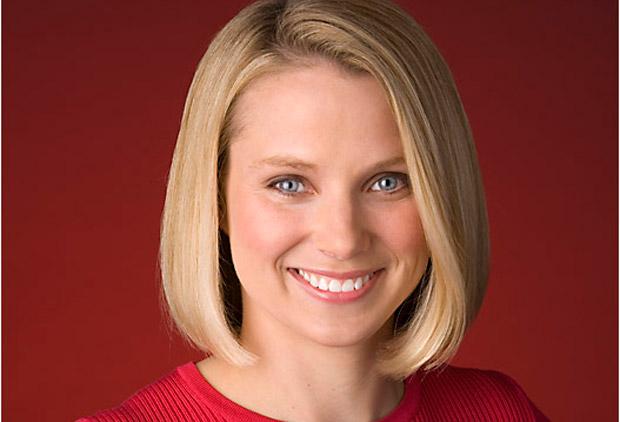
I do agree with Marissa's statement as let's be honest, computer and the idea of search has really only blemished over the past ten - twenty years. For example sales of the computer went from 40,000 in 1975 to 95.4 million in 2011 in the United States. (Computer Sales Statistics, 2012). As for my personal experince with search and especially with google itself, it has really developed and increased over the past 5 years. 5 years ago i would probably have used google 5-10 times a week and only for my key interests. Today im constantly on search and google up to 10+ times a day, and not just searching about my key interests but also as a kind of second nature thing to do to make sure what im hearing throughout society is real.
I look at search or google as a relief mechanism. If you cut yourself you get a bandaid, if you're unsure of anything you google it. It is a way of healing our curiousity.
Part 2: History of the internet.
a. So what are the 6 webs?
- Here: mobile devices
- Near: desktop computing
- Far: typical TV viewer experience
- Weird: web voice recognition systems
- B2B: business systems talking to each other.
- D2D: device to device
(Malik, O. 2006)
b. Could there be more?
- It is clear that with advancing technology and research behind finding new wasy to interact with knowledge and the world around us, that future webs will be introduced.
c. What does it mean for business?
- This means that businesses need to be fully aware of all 6 webs and understand how the market uses them. To fully take potential of the webs they must utilise all resources available to them to substantiate a market that is advancing with technology. A common understanding between consumer and buyer is key to becoming a market leader instead of a market follower.
REFERENCES:
Rappa, M. (2009). Navigating the Web. Retrieved 13 March, 2013, from http://digitalenterprise.org/navigation/nav.html
Statistic Brain. (August 24, 2012). Computer Sales. Retrieved 13 March, 2013, from http://www.statisticbrain.com/computer-sales-statistics/
Malik, O. (February 8, 2006). Six webs of Bill Joy. Retrieved 13 March, 2013, from http://gigaom.com/2006/02/08/six-webs-of-joy/
Tuesday, 5 March 2013
TOPIC 1 - INTRODUCTION TO eBUSINESS
1) Internet risks – give examples of four things that can go wrong with a transactional site?
a) privacy and overall security of personal details.
b) the site may be appear proper however its information or products could be misleading, incorrect or untrustworthy.
c) hacking is becoming more common, therefore false orders.
d) communication may be non-existant which reduces a common understanding.
2) Definition of each
eCommerce: eCommerce is the buying and selling of products by businesses and consumers over the World Wide Web (www) It includes the process of searching and selcting products on online catalogues.
(What is Ecommerce?, 2008)
eBusiness: eBusiness or electronic business is the term used to describe using the internet to operate a business. It includes collaborting with customers, businesses and provides entrepreneurs excellent opportunities to enter a market. (Understanding eBusiness)
3) What is the
difference between buy side and sell side ecommerce?
In the sell side you are inviting customers to your site and enticing them to buy your products whereas on the buy side you are doing the opposite and buying other business' products and services.
4) Describe the different types of eBusiness
B2C: business to consumer outlook. Sells products directly to online retail consumers. A good examle is Amazon.
B2B: business to business outlook. It involves companies using the Internet to conduct transactions with one other.
C2B: consumer to business outlook. It is a unique e-business model in which consumers create value and demand for products. A good example is Priceline.com airline ticket website.
C2C: consumer to consumer outlook. This enables consumers to behave as buyers and sellers in third-party-facilitated online marketplaces.
(Types of eBusiness models, 2013)
4) Describe the different types of eBusiness
B2C: business to consumer outlook. Sells products directly to online retail consumers. A good examle is Amazon.
B2B: business to business outlook. It involves companies using the Internet to conduct transactions with one other.
C2B: consumer to business outlook. It is a unique e-business model in which consumers create value and demand for products. A good example is Priceline.com airline ticket website.
C2C: consumer to consumer outlook. This enables consumers to behave as buyers and sellers in third-party-facilitated online marketplaces.
(Types of eBusiness models, 2013)
5) Which digital technology has the highest penetration rate? Explain and source your answer
By far, the mobile phone has the highest penetration rate. Some countries, for example China, will exceed 120% in 2013 which means that each citizen in china is more likely to have more than one mobile phones. China has already more than 1.1 billion mobile phone subscriptions, aswell as the United States already surpassing its population numbers.
(ChinaDaily, 27 March, 2013)
6) List: Four drivers to adoption of sell-side e-commerce by business
(ChinaDaily, 27 March, 2013)
6) List: Four drivers to adoption of sell-side e-commerce by business
a) expand current market
b) cost reductions contributing to increased profit
c) total control of their current and future image and projections
d) able to expand and reach other markets
b) cost reductions contributing to increased profit
c) total control of their current and future image and projections
d) able to expand and reach other markets
7) List: Four barriers to adoption of sell-side e-commerce by business.
a) Not having the required or equivalent knowledge needed.
b) Initial start up costs.
c) Lack of communication between consumer and service provider.
d) Lack of resources or lack of time.
8) How might a restaurant benefit from an online presence?:
It is key im sure for every business, whether retail or hospitality, that they are creating the best output of awareness for their services and products to current consumers but also to entice future consumers. It is evident today just how popular online shopping is with retail stores, with the physical retail store being pushed to the side in favour of a few clicks of the mouse. If the restaurant is able to present its menu, goals and future aspects of thir business through current technology, it allows consumers to appreciate the concern of consumers; we want fast information. It further allows the restaurant to be reviewed online and create a vast desire to for consumers to dine and experience the venue.
9) What are some examples of Digital information?:
With the level of technology at our disposal in this day and age, there are many sources of digital information.
They include computers, mobile phones, T.V's, Ipads, tablets, gps systems, and portable devices. Im sure in the next 50 years we will see our windows become a source of digital information.
10) What is the semantic web? Are we there yet?
The semantic web is a web of data - of dates and titles and part numbers and chemical properties and any other data one might conceive of. It is about making information more easier to gather and more accessible to the every day individual. There has been a lot of work been put into semantic web with multiple challenges that still need to be further examined and better executed to allow the semantic web to be an successful technology pushed service.
(W3C, 2013)
a) Not having the required or equivalent knowledge needed.
b) Initial start up costs.
c) Lack of communication between consumer and service provider.
d) Lack of resources or lack of time.
8) How might a restaurant benefit from an online presence?:
It is key im sure for every business, whether retail or hospitality, that they are creating the best output of awareness for their services and products to current consumers but also to entice future consumers. It is evident today just how popular online shopping is with retail stores, with the physical retail store being pushed to the side in favour of a few clicks of the mouse. If the restaurant is able to present its menu, goals and future aspects of thir business through current technology, it allows consumers to appreciate the concern of consumers; we want fast information. It further allows the restaurant to be reviewed online and create a vast desire to for consumers to dine and experience the venue.
9) What are some examples of Digital information?:
With the level of technology at our disposal in this day and age, there are many sources of digital information.
They include computers, mobile phones, T.V's, Ipads, tablets, gps systems, and portable devices. Im sure in the next 50 years we will see our windows become a source of digital information.
10) What is the semantic web? Are we there yet?
The semantic web is a web of data - of dates and titles and part numbers and chemical properties and any other data one might conceive of. It is about making information more easier to gather and more accessible to the every day individual. There has been a lot of work been put into semantic web with multiple challenges that still need to be further examined and better executed to allow the semantic web to be an successful technology pushed service.
(W3C, 2013)
11) Describe whether your experience of completing
the PENA was positive or negative and give your reasons for your
answer
My experience with PENA was positive as it allowed me to exercise skills and understand a constructive evaluation, based on my efforts alone. I felt confident in what i was presenting as information to the questions which reflected in my results.
12) Could you suggest an alternative delivery method for the PENA utilising any
alternative media and/or technologies? Include any additional comments you may
have.
I think it would be more productive if images and/or videos were used to create diversity and to test us more clinically on what we see, rather than what we think or are able to produce through words and thoughts. You see this method used in Psychology, and would benefit the individual taking PENA.
REFERENCES:
ChinaDaily. (March 27, 2013). Mobile phone penetration rate likely to pass 120% in 2013. Retrieved March 6, 2013, from http://www.chinadaily.com.cn/china/2013-02/27/content_16262196.htm
Gilani,N. (2013). Types of eBusiness models. Retrieved on March 6, 2013, from http://yourbusiness.azcentral.com/types-ebusiness-models-1144.html
Understanding eBusiness. (N/A). What is eBusiness?. Retrieved on March 6, 2013, from http://toolkit.smallbiz.nsw.gov.au/part/15/74/316
W3C. (2013). Semantic Web. Retrieved on March 6, 2013, from http://www.w3.org/standards/semanticweb/
What is Ecommerce. (2008). An overview. Retrieved on March 6, 2013, from http://www.dynamicwebs.com.au/tutorials/e-commerce.htm
Subscribe to:
Comments (Atom)